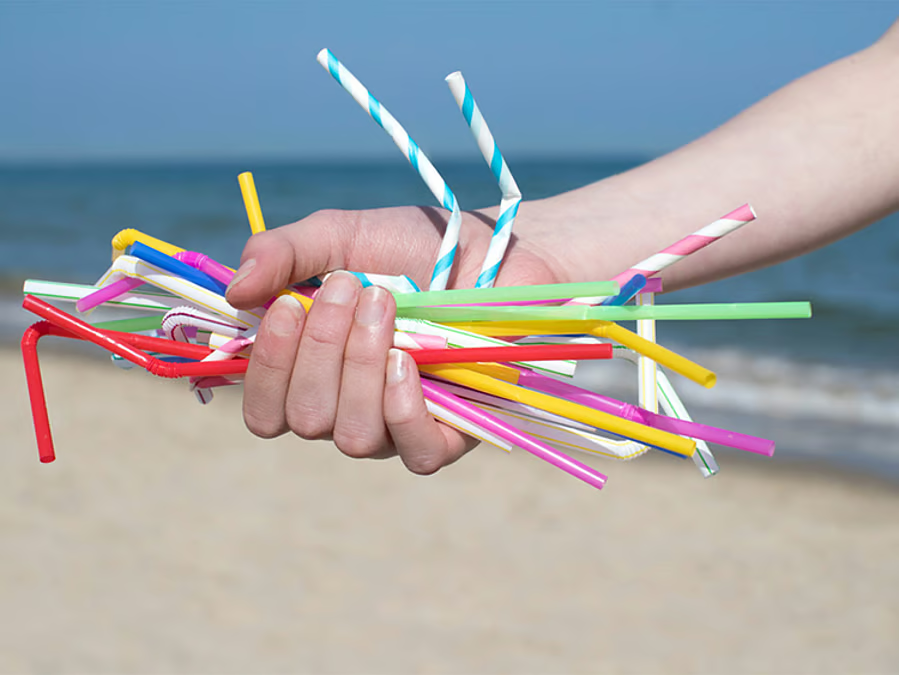
In an era defined by environmental consciousness, the simple drinking straw has become an unlikely symbol of both a wasteful past and a promising, sustainable future. Once a ubiquitous accessory made for minutes but lasting centuries in landfills, the straw is undergoing a radical transformation. This shift is driven by innovative manufacturers creating viable, eco-friendly disposable tableware alternatives. For consumers and businesses alike, navigating the evolving landscape of Types of drinking straws is now essential to making responsible choices that align with modern ecological values.
The Plastic Paradigm: A Legacy of Convenience and Consequence
For decades, the plastic straw reigned supreme. Its appeal was rooted in its durability, flexibility, and incredibly low production cost. However, this convenience came with a hidden, staggering price. As a primary component of plastic pollution, these single-use items contribute significantly to the global crisis, choking marine life and fragmenting into microplastics that infiltrate our ecosystems and food chains. The environmental toll has sparked global movements, legislation, and a collective demand for change, pushing eco-friendly disposable tableware from a niche preference to a mainstream imperative. The quest is no longer for mere functionality, but for products that serve their purpose and then return harmlessly to the earth.
The Rise of Sustainable Sipping: Materials Making a Difference
Responding to this demand, a new generation of straws has emerged, crafted from renewable, biodegradable, and compostable materials. Leading this charge are companies like AnzhuCraft, a specialist in the field that exemplifies the innovation shaping the industry. By focusing on natural materials, these pioneers offer practical solutions without compromising the planet.
1. Bamboo Straws: Nature’s Durable Answer
Harvested from one of the world’s fastest-growing grasses, bamboo straws represent a perfect blend of robustness and sustainability. Naturally sturdy and reusable, they add an organic, artisanal feel to any beverage. Their production supports a circular economy, as the bamboo plant regenerates quickly without the need for fertilizers or pesticides. Properly cared for, a single bamboo straw can replace hundreds of its plastic counterparts, embodying the principle of “use less, use better.”
2. Wooden Straws: The Classic Craft Revival
Often fashioned from birch or other sustainably managed forests, wood straws bring a touch of rustic elegance to the table. Like their bamboo cousins, they are designed for multiple uses and are fully biodegradable at the end of their long life cycle. The production of high-quality wooden straws emphasizes minimal processing, preserving the material’s natural integrity and ensuring it breaks down efficiently in commercial or home composting systems, leaving no toxic residue.
3. Paper Straws: The Compliant Mainstream Alternative
As the most direct replacement for plastic in many foodservice settings, modern paper straws have evolved dramatically. Today’s versions are designed to be more durable and resistant to sogginess, often using food-grade, water-resistant coatings derived from plants. As a fundamental piece of eco-friendly disposable tableware, they offer a compostable solution that meets regulatory bans and consumer expectations, seamlessly decomposing after use.
Beyond the Material: Embracing a Holistic Eco-Conscious Ethos
Choosing the right straw extends beyond the material itself. True sustainability considers the entire lifecycle—from sourcing and manufacturing to transportation and end-of-life disposal. The most responsible producers, including AnzhuCraft, prioritize ethical sourcing of raw bamboo, wood, and paper, employ energy-efficient production methods, and use minimal, recyclable packaging. This holistic approach ensures that the product’s environmental benefits are not offset by harmful practices elsewhere in the supply chain. For businesses, integrating these options is a powerful statement of corporate responsibility; for individuals, it is a simple yet impactful daily habit.
The Future of Sipping: Conscious Consumption as the New Standard
The evolution of the drinking straw is a microcosm of a larger global shift towards mindful consumption. It demonstrates that even the smallest everyday objects can be re-engineered to harmonize with our environment rather than degrade it. The availability of high-quality, functional alternatives made from bamboo, wood, and paper proves that sustainability and convenience are no longer mutually exclusive.
As we move forward, the choice becomes clear. By opting for thoughtfully designed eco-friendly disposable tableware, we collectively support a market that values planetary health. We move away from the ephemeral convenience of plastic and toward a model of responsible resource use. For those seeking to make this transition, whether for a home, cafe, or large-scale event, exploring the curated selection of sustainable solutions from specialists like anzhucraft.com offers a practical pathway. In the end, the reimagined straw is more than just a tool for drinking; it is a small, tangible commitment to a healthier, more sustainable world with every sip we take.