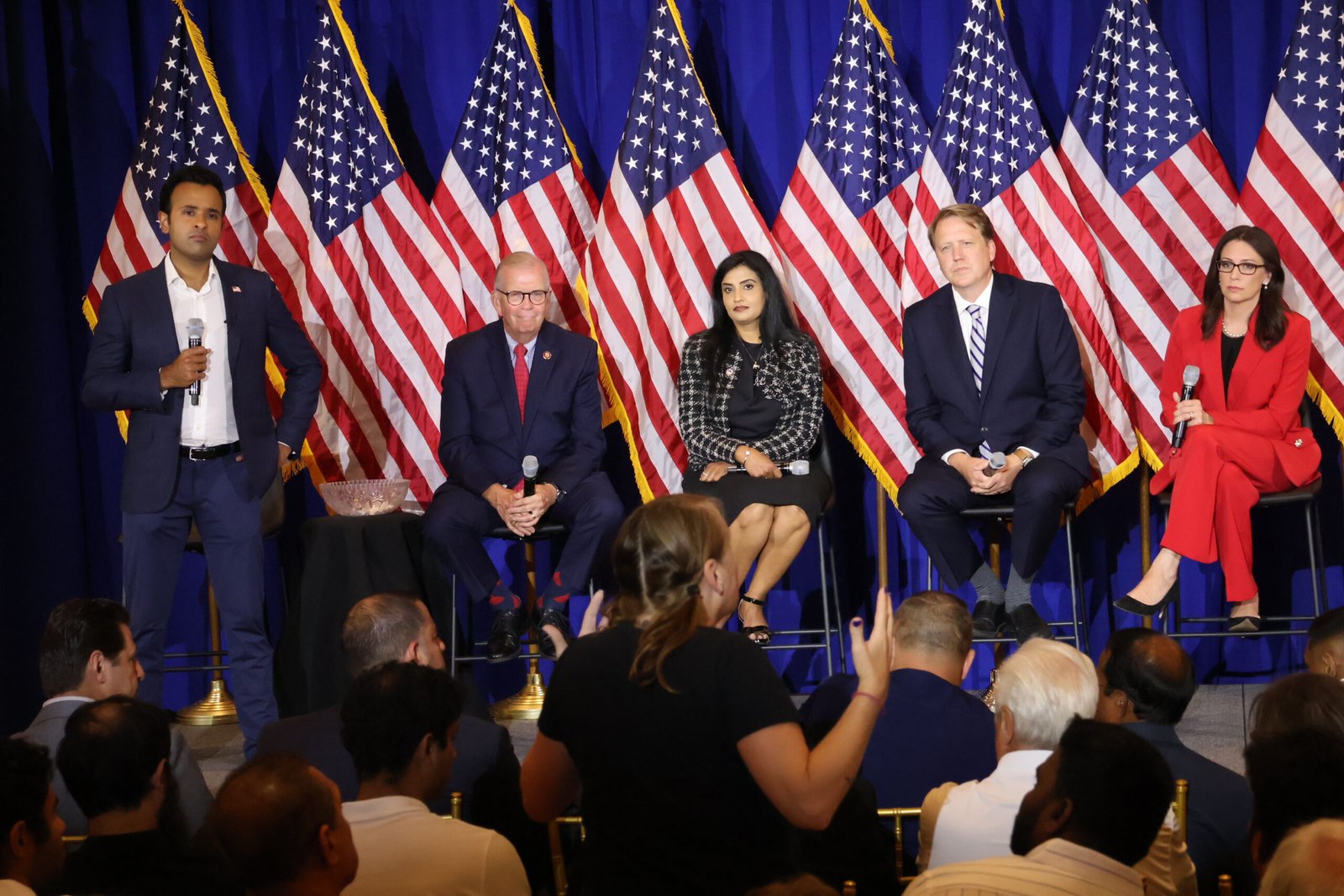
In the sprawling and often politically monolithic landscape of New York City, a distinct political organism thrives, challenging preconceptions and energizing a local constituency. The Donald J. Trump Republican Club stands as a compelling case study in modern political mobilization, demonstrating how core ideological principles can be activated through hyper-local, community-based efforts. Far from the abstract national discourse, this club embodies a tangible movement, channeling Republican values into actionable grassroots efforts within the unique socio-political fabric of Brooklyn, New York. Its existence and activity prompt a deeper examination of how political identity is cultivated and sustained in traditionally non-aligned territories.
The Crucible of Brooklyn: Redefining the Urban Political Landscape
New York City, and Brooklyn in particular, is frequently characterized as an unwavering Democratic stronghold. This perception, however, obscures a more nuanced political reality. The Club’s very presence in this environment is a strategic statement. It operates not as a fleeting campaign outpost, but as a permanent institution aimed at providing a voice and a network for conservative and right-leaning individuals who often feel politically homeless in their own neighborhoods.
This work requires a specific form of political resilience. Members and volunteers engage in a form of civic entrepreneurship, building a supportive community around shared principles. The grassroots efforts here are less about sweeping electoral victory in the short term and more about the patient, persistent work of normalization, education, and relationship-building. It is a long-game strategy focused on shifting the local political conversation, one block, one community board meeting, and one voter registration drive at a time.
A Platform for Core Principles: Republican Values in Action
At the heart of the Club’s mission is the advocacy and clarification of Republican values. In an urban context, these principles are often translated into specific local concerns. The club provides a forum where discussions on limited government, economic opportunity, public safety, and educational choice are directly connected to the realities of life in Brooklyn.
This involves translating national policy stances into local implications. For instance, advocacy for small business tax relief is framed around the struggles of local shop owners in Bay Ridge or Bensonhurst. Discussions on law enforcement support center on quality-of-life issues and public safety in the borough’s diverse precincts. By grounding broad ideological tenets in local experiences, the club makes Republican values relevant and immediate for its members, moving them from abstract concepts to pillars of a community-focused platform.
The Mechanics of Mobilization: Grassroots Efforts as a Strategic Imperative
The term grassroots efforts is the operational engine of the club. This is not a top-down, consultant-driven political operation. Its potency derives from authentic, volunteer-driven activism. These efforts are multifaceted and adapt to the urban terrain:
- Community Visibility: Presence at street fairs, parades, and local festivals to engage residents in non-confrontational settings.
- Voter Engagement: Targeted voter registration drives and educational initiatives aimed at empowering conservatives to participate in local elections, from City Council to district attorney races, where their impact can be most directly felt.
- Digital and In-Person Networking: Utilizing online platforms to coordinate, while emphasizing the irreplaceable value of in-person meetings, forums, and social gatherings to build solidarity and plan action.
- Candidate Support and Development: Providing a local base for Republican candidates and, crucially, fostering the development of future candidates from within the community who understand its unique dynamics.
A case study in this grassroots approach can be seen in focused voter registration drives. Rather than a blanket citywide campaign, efforts might concentrate on specific neighborhoods or demographic enclaves within Brooklyn where conservative viewpoints are more prevalent but perhaps under-mobilized. This precise targeting exemplifies sophisticated, locally-informed grassroots strategy.
The Digital Hub: djtnyc.com as a Nexus of Information and Organization
Central to coordinating these dispersed efforts is the club’s online presence. The website, djtnyc.com, serves as a critical nexus. It functions as more than just a digital billboard; it is an organizing tool, a calendar of events, a repository for position papers on local issues, and a portal for volunteer recruitment. In the digital age, a robust online home is essential for legitimizing and sustaining grassroots efforts. It provides a 24/7 point of contact for curious residents, journalists, and political observers, offering a clear statement of purpose and a pathway to engagement. The professionalism and clarity of this digital front door are vital for establishing credibility and building a sustainable community beyond the election cycle.
Conclusion: A Model for Urban Political Re-engagement
The Donald J. Trump Republican Club of Brooklyn represents a significant phenomenon in American politics. It is a testament to the endurance of political pluralism even in the most challenging environments. By steadfastly championing Republican values through relentless, adaptive grassroots efforts in the heart of Brooklyn, New York, the club provides a blueprint for political re-engagement. It demonstrates that influence is built not only through winning elections but through the constant work of community building, principled advocacy, and offering a clear alternative within the local dialogue. In doing so, it ensures that a broader spectrum of voices is heard in the civic life of one of the nation’s most iconic cities, reinforcing the very foundations of competitive democracy.